Showing posts with label J.G. Ballard. Show all posts

Monday, 3 June 2013

Books: Extreme Metaphors: Interviews With J.G.Ballard, 1967-2008: Edited By Simon Sellars And Dan O'Hara


Reading this excellent collection of J.G. Ballard’s interviews I was constantly reminded how off-message he is politically from my own radical left wing albeit libertarian views and how different his class background is from my own, even though he lived very nearby in Shepperton. But oddly (or not) his vision and style resonates so strongly that not only is he my favourite fiction writer but I consider him a major thinker too.

If I approach him as someone purely concerned with the psychological world of his introverted obsessed characters and their response to collapse and catastrophe or the stultifying boredom of modern society, ignoring political solutions or movements, it helps to iron out the deep discrepancies. I believe we are entering an era of crisis, collapse and catastrophe and the bubble of consumerism and affluence we used to live in the West has finally burst. (One predication that J.G. Ballard makes constantly in these interviews, that we would be living in a society of leisure and wealth in the West has proven to be wrong.) How do we grasp psychologically the strange landscapes thrown up by a disintegrating world and what personal satisfactions can we gain from it-if only in an aesthetic sense? These are the disturbing questions JGB asks in his fiction but is it possible to combine ‘inner space’ with the collective political and social project of human emancipation and hope? I really don’t know.

A very interesting review here from the philosopher John Grey (New Statesman.)

Sunday, 26 February 2012

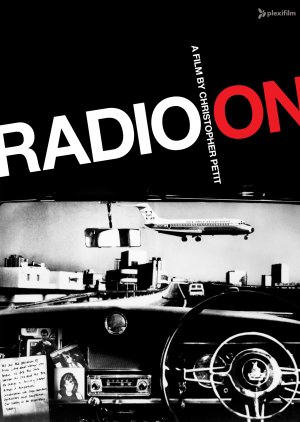
DVD's From My Collection: Radio On, Directed By Christopher Petit (1979)


Another 'existentialist' road movie this one British and Post-Punk. It's in black and white, it's moody, atmospheric and more about landscape then action or plot and has a fantastic soundtrack. The clip above is interesting to J.G. Ballard fans as this is the Westway Interchange in West London, site of his novel, Concrete Island. 

For further info read Wiki entry here.


Sunday, 20 June 2010

Book Review from Lenin's Tomb: Evil Paradises: Dreamworlds of Neoliberalism, Edited by Mike Davis & Daniel Bertrand Monk

From the blurb at the back of the intensely Ballardian (see J.G. Ballard's novel, Super-Cannes) Evil Paradises: What kinds of worlds would pure capitalism, unfettered by organised labor or state regulation, bring into existence? In this stunning collection, an extraordinary group of urbanists, architects, historians and visionary thinkers reflect on the capitalist "utopias" being constructed in cities, deserts, and even in the middle of the sea. All across the globe-in Dubai, Kabul, Hong Kong, Cairo and the Iranian desert-the nouveaux riches have created fantasy Californias, complete with Mickey Mouse statues, while their maids sleep in rooftop chicken coops. Filled with "stories of greed, exploitation and enough consumption to make a hedge fund manager blush" (Los Angeles Times), Evil Paradises is a timely and powerful exploration of these phantasmagoric but all too real places where consumption and inequality surpass our worst nightmares.

Read the review from the blog Lenin's Tomb here

Friday, 14 May 2010

Book Review: Hello America by J.G. Ballard


With Hello America I have now read all of J.G. Ballard's novels (except the disowned and out of print Wind from Nowhere.) I was unable to find a decent review of this minor work of J.G's; a straight forward post-apocalypse adventure yarn, but packed with Ballard's characteristic imagery and obsessions. Read the rather geeky Wikipedia entry here.

Saturday, 26 September 2009

Book Review: The User's Guide to the Millennium: Essays and Reviews by J.G. Ballard

J.G. Ballard also wrote reviews and articles for newspapers and magazines and the User's Guide to the Millennium is a varied collection of these non-fiction works from the 60's up the mid 90's. They display J.G's wide interests, covering everything from Hollywood to Science Fiction, making manifest his completely original take on the world. Many of the reviews run at a tangent from the subject discussed, drawing from his own reflections and ideas and in no way pretending to be objective, but this does not matter in the slightest as J.G. Ballard is my definition of a genius-totally unique. The best writing for me is mostly from New Worlds magazine in the 1960's, when he was at his most 'cutting edge' and literary respectability (Empire of the Sun) a long way off. Here he defines his own unigue type of science fiction stories against the classic space fiction of conventional SF, looks at the surrealist painters and their influence on him, discusses the importance of William Burroughs for literature and how Hitler and the Nazi's would not be out of place in the garish media landscape of the swinging sixties.

Friday, 18 September 2009

Ballardian Ground Zero: J.G. Ballard's House in Shepperton

Above is J.G. Ballard's semi (on the right) in Shepperton, where he lived since 1960 nearly up to his death in April, 2009. Here he brought up his three children as a single parent (his wife died in 1964) and of course wrote most of his short stories and all of his novels. Here in the everyday suburbs, his middle class neighbours probably oblivious to his literary importance, lived an author who has been compared to such masters of visionary writing as Jorge Luis Borges, Franz Kafka and H.G. Wells. Ballard is like the 18th Century poet and artist William Blake, who lived an obscure domestic life in London but saw angels in the trees of Poplar.
I took these photographs in late July nearly four months after J.G's death, (I live nearby across the Thames in Walton-see my blog postings here and here) and except for the lawn being cut and the net curtains on the top floor drawn back, the house has not changed; his car is still in the drive, nor has the house been put up for sale. As far as I know it's still the same as I write this in September-my brother went past on one of his runs a couple of weeks ago. It was sad (even rather ghostly) standing here for a moment, gazing at this abode of the accumulated imagination, now a mere shell, albeit with its surface details still intact, with its guiding light flown forever.
At the end of J.G's road is the M3 motorway, constructed in the early 70's. At the same time in the house above he was writing Crash. J.G. Ballard mapped out (almost as if sprung from his own imagination) the disturbing and ambiguous terrain we were creating all around us, to the point where we now live in a Ballardian world.

Monday, 31 August 2009

Book Review: High-Rise by J.G. Ballard

The first J.G. Ballard book I read as a teenager and the one I would recommend to those curious enough to want to start reading his works. The themes of High-Rise resonate through nearly all of his later novels-the real logic behind the isolated enclaves of late capitalist consumer society (gated communities, luxury holiday resorts, shopping malls) brought to the surface; their brightly lit but soulless affluence reduced to dystopias of violence and perversity. Like his earlier SF disaster novels it's apocalyptic but the societal collapse is contained within the microcosm of a 40 story high-rise of the very near future not on the planetary level; but the novel is still SF, a speculation about the negative possibilities of the future. The book has violence aplenty but lacks the obsessively explicit or deliberately repetitive feel of Crash. Unlike The Atrocity Exhibition it's structured conventionally with a plotted beginning and end and solid characters, although a hallmark of Ballard's style is that idea and image comes before in-depth character study.


The setting is of course a newly developed high-rise complex for the professional middle classes, a 'vertical city' situated in London's Docklands. All amenities are self-contained within the block with a shopping centre, a bank, restaurants and swimming pools-nobody need leave the building except to attend their workplaces. Minor irritations and infractions (noisy parties, the absurd resentments of the tenants, power cuts, etc) escalate gradually into brutal gang warfare between the different floors, remorselessly leading to a complete breakdown of any form of structured society, amongst the graffiti strewn corridors and staircases, broken escalators, piles of garbage and smashed furniture. Three characters dominate the novel: Dr Robert Laing, who works in a nearby medical school, who withdraws into his own private world of survival, like all the inhabitants of the building, quite happy existing as a lone hunter-gatherer: The macho Richard Wilder, ex-rugby player and TV journalist from the lower floors attempting to make a documentary about the high-rise, that ends in a quest to reach the 40th floor, his persona reduced to that of masculine savage, his useless cine-camera clutched like a shamanic totem. Anthony Royal, the architect of the whole complex, living in the top-most penthouse, regarding the high-rise as a social laboratory, but like Dr Frankenstein becoming a victim of his own experiment.

Some more literal minded readers may quibble that the scenario of High-Rise is an impossibility; eventually the outside world would become aware of the breakdown of law and order and the police sent in. (Maybe eventually they do but long after the events accounted in the novel) But this is missing the point as the book should be read as speculative fiction not social realism; an ambiguous warning about the negative possibilities latent in our commodified, technologically dominated society. It's real concern lies with the psychological affect of the building itself.

A new social type was being created by the apartment building, a cool, unemotional personality impervious to the psychological pressures of high-rise life, with minimal needs for privacy, who thrived like an advanced species of machine in the neutral atmosphere. This was the sort of resident who was content to do nothing but sit in his over-priced apartment, watch television with the sound turned down, and wait for his neighbours to make a mistake...people who were content with their lives in the high-rise, who felt no particular objection to an impersonal steel and concrete landscape, no qualms about the invasion of their privacy by government agencies and data-processing organizations and if anything welcomed these invisible intrusions, using them for their own purposes. These people were the first to master a new kind of late twentieth century life. They thrived on the rapid turnover of acquaintances, the lack of involvement with others, and the total self-sufficiency of lives which, needing nothing, were never disappointed...By its very efficiency, the high-rise took over the task of maintaining the social structure that supported them all. For the first time it removed the need to repress every kind of anti-social behaviour, and left them free to explore any deviant or wayward impulses. It was precisely in these areas that the most important and most interesting aspects of their lives would take place. Secure with in the shell of the high-rise like passengers on board an automatically piloted airliner, they were free to behave in any way they wished, explore the darkest corners they could find. In many ways, the high-rise was a model of all that technology had done to make possible the expression of a truly 'free' psychopathology.

Published in 1975 the above passage from High-Rise is even more relevant in the early 21st century and highlights his genius. We now truly live in the strange and disturbing world J.G. Ballard began to map out in his fictions of the 1960's and 70's.


Websites for J.G. Ballard Fans:


Friday, 28 August 2009

Book Cover of J.G. Ballard's Crash


Due to technical problems I was unable to upload the book cover of my 1995 edition of J.G. Ballard's Crash into the review. Here it is instead in a separate posting.

Friday, 14 August 2009

Book Review: The Atrocity Exhibition and Crash by J.G. Ballard

Alongside Empire of the Sun, his wartime autobiographical novel, The Atrocity Exhibition and Crash are considered the most important and distinctive of J.G. Ballard's fictions. But a word of warning to anyone new to J.G. or those of a sensitive disposition; these are transgressive pieces of literature, very much extreme works of the imagination. When the manuscript for Crash was sent off for publication in 1973, the publisher's reader reported back to her editor, not without a certain amount of justification, that 'this author is beyond psychiatric help-do not publish!'

The Atrocity Exhibition is a collection of linked pieces; each piece or 'condensed novel' originally published separately in the avant-garde journal Ambit and Michael Moorcock's left-field science fiction magazine, New Worlds. They detail the obsessions of an alienated psychiatrist under going some kind of mental breakdown; attempting to make sense of the irrational violence of the 1960's-the assassination of JFK, the Vietnam War, The H Bomb, car crashes, etc-and his own bodily and conscious identity, in a world dominated by advertising, iconic celebrities, pornography and media saturation. There is no plot and the book can be read out of sequence, but a very loose and fragmented narrative can be mapped out. Here is an example of prose taken from Chapter Five: Notes Towards A Mental Breakdown:

Pentax Zoom. In these equations, the gestures and postures of the young woman, Trabert explored the faulty dimensions of the space capsule, the lost geometry and volumetric time of the dead astronauts.

(1) Lateral section through the left axillary fossa of Karen Novotny, the elbow raised in a gesture of pique: the transliterated pudenda of Ralph Nader.

(2) A series of paintings of imaginary sexual organs. As he walked around the exhibition, conscious of Karen's hand gripping his wrist, Trabert searched for some valid point of junction. These obscene images, the headless creatures of nightmare, grimaced at him like the exposed corpses in the Apollo capsule, the victims of a thousand auto-crashes.

(3) 'The Stolen Mirror' (Max Ernst). In the eroded causeways and porous rock towers of this spinal landscape Trabert saw the blistered epithelium of the astronauts, the time-invaded skin of Karen Novotny.

The Atrocity Exhibition is a challenge because of its style and disturbing content. But for those with the right temperament it makes for an exhilarating read. Its strength lies in its visual intensity like a video collage or surrealist painting, its mysteriousness and utter originality-there is nothing quite like this in literature. The latest edition contains annotations by the author which are worth reading in themselves for their unsettling but thought provoking uniqueness.

The Weapons Range.

Weapons ranges have a special magic, all that destructive technology concentrated on the production of nothing, the closest we can get to certain obsessional states of mind. Even more strange are the bunkers of the Nazi Atlantic Wall, most of which are still standing, and are far larger than one expects. Space-age cathedrals they threaten the surrounding landscape like lines of Teutonic knights, and are examples of cryptic architecture, where form no longer reveals function. They seem to contain the codes of some mysterious mental process. At Utah Beach, the most deserted stretch of the Normandy coast, they stare out over the washed sand, older than the planet. On visits with my agent and his wife, I used to photograph them compulsively.

'If The Atrocity Exhibition was a firework display in a charnel house, Crash was a thousand-bomber raid on reality...', so said J.G. describing Crash in his autobiography, Miracles of Life. Crash unlike The Atrocity Exhibition has the conventional structure of a novel, a first person narration with plot and characters. But Crash travels even further into the realms of the psychopathic and obsessional. The narrator, disturbingly named 'James Ballard,' accounts his escalating sexual fixation with crushed metal and car crash injuries after his own auto-accident and his homoerotic fascination with Vaughan, 'hoodlum scientist' and 'nightmare angel of the highways.' Vaughan is a type that inhabits many of Ballard's novels; usually a doctor, psychologist or scientist but dangerously unhinged, an expounder of a 'deviant logic' underpinning modern society and crucially holding a strong but unsettling attraction for the main character or narrator. Vaughan celebrates the automobile disaster as a form of religious sacrament, a fusion of flesh and technology, sex and death.

Vaughan unfolded for me all his obsessions with the mysterious eroticism of wounds: the perverse logic of blood-soaked instrument panels, seat -belts smeared with excrement, sun-visors lined with brain tissue. For Vaughan each crashed car set off a tremor of excitement, in the complex geometries of a dented fender, in the unexpected variations of crushed radiator grilles, in the grotesque overhang of an instrument panel forced on to a driver's crotch as if in some calibrated act of machine fellatio. The intimate time and space of a single human being had been fossilized for ever in this web of chromium knives and frosted glass.

Crash is repetitive (some would say tedious) and monomaniacal, but this bombardment of perverse but clinical imagery, acts like a mantra and adds to the hallucinatory but nightmarish extremity of the novel. The empty landscape of motorways and flyovers, filling stations and ultra modern hotels and apartment blocks with Heathrow airport at the centre is turned into an alien terrain.

On the first afternoon I had barely recognized the endless landscape of concrete and structural steel that extended from the motorways to the south of the airport, across its vast runways to the new apartment systems along Western Avenue. Our own apartment house at Drayton Park stood a mile to the north of the airport in a pleasant island of modern housing units, landscaped filling stations and supermarkets, shielded from the distant bulk of London by an access spur of the northern circular motorway which flowed past us on its elegant concrete pillars. I gazed down at this immense motion sculpture, whose traffic deck seemed almost higher than the balcony rail against which I leaned. I began to orientate myself again round its reassuring bulk, its familiar perspectives of speed, purpose and direction.

During my weeks in hospital the highway engineers had pushed its huge decks more than half a mile further south. Looking closely at this silent terrain, I realised the entire zone which defined the landscape of my life was now bounded by a continuous artificial horizon, formed by the raised parapets and embankments of the motorways and their access roads and interchanges. These encircled the vehicles below like the walls of a crater several miles in diameter.

Crash can be read in three different ways; as a 'kind of psychopathic hymn' or 'the first pornographic novel based on technology;' as a psychological horror story detailing obsessional states of mind or as J.G. puts it in the last line of his 1995 introduction:

Needless to say, the ultimate role of Crash is cautionary, a warning against that brutal, erotic and overlit realm that beckons more and more persuasively to us from the margins of the technological landscape.

Saturday, 1 August 2009

Book Review: The Drought by J.G. Ballard

In tribute to the great J.G. Ballard who died in April, I'm re-reading four of his novels: The Drought, The Atrocity Exhibition, Crash and High Rise.


J.G. Ballard's eco-catastrophe novels from the 1960's are not like your average disaster novel. He's not interested in didactic warnings or setting up an apocalyptic scenario merely as backdrop to the characters lives. These novels are about drastically altered landscapes, surreal vistas, intrinsically connected to the central protagonists' inner or mental space. The Drought is composed of intensely visual, descriptive prose, used as a paintbrush to conjure beautiful but desolate geography in the readers' mind: drained lakes and dry river beds littered with rusting ships and wrecked technology and cities succumbing to encroaching dunes.

At this point the river had been dredged and widened. They passed more launches and river-craft, half-submerged under the sand-hills. Ransom stopped and let the others move on ahead. He looked at the craft beached around him. Shadowless in the vertical sunlight, their rounded forms seemed to have been eroded of all but a faint residue of their original identities, like ghosts in a distant universes where drained images lay in the shallows of some lost time. The unvarying light and absence of all movement made Ransom feel that he was advancing across an inner landscape where the elements of the future stood around him like the objects in a still life, formless and without association.

The book's plot is simple. Dr Charles Ransom remains behind in a lakeside town, Hamilton, in an unspecified country as most people flee to the coast. The town succumbs to ever increasing levels of dust and sand, as the lake and the river dry up when the world-wide drought hits; the town eventually burning as religious factions fight it out. In the second part ten years have gone by and Ransom is now living a precarious life on the endless salt flats of the coast where scattered settlements cling to a barely sustained existence. The third part describes the journey back along the dried up river bed through the dune infested towns and sand inundated wreckage of civilization, in search of a possible oasis. The characters of the novel are vivid insane archetypes seemingly springing from Ransom's unconscious rather then any external reality. A minor character worth mentioning is Jonas, the leader of a strange cult formed by the fishermen of Hamilton, and his obsession with finding a 'new' river in the desolate wilderness of the lake, obviously a seed of a much later novel, The Day of Creation (1988)

The over riding symbol of The Drought is the desert, leeching away time, eroding the past and sense of the future into an endless fossilized present. Ballard draws from the surrealist painting 'Jours de Lenteur' by Yves Tanguy, hanging in Ransom's houseboat, and the painting's name is also the title of the last chapter of the novel, making explicit its connection with surrealism.
As he pondered on the real reasons for their journey, he had begun to sense its true inner compass. At first Ransom had assumed that he himself, like Philip Jordan and Mrs Quilter, was returning to the past, to pick up the frayed ends of his previous life, but he now felt that the white deck of the river was carrying them all in the opposite direction, forward into zones of time future where the unresolved residues of the past would appear smoothed and rounded, muffled by the detritus of time, like images in a clouded mirror. Perhaps these residues were the sole elements contained in the future, and would have the bizarre and fragmented quality of the debris through which he was now walking. None the less they would all be merged and resolved in the soft dust of the drained bed.

Postscript: Without any knowledge of J.G. Ballard or my interest in him, relatives of mine from Australia sent my brother these pictures of Lake Ballard in Western Australia and Antony Gormley's sculptures situated on this waterless salt lake. These artworks are not inspired by The Drought or Ballard and any connection is purely coincidental but I believe the unconscious resonances with the novel are uncanny.


Friday, 24 April 2009

My Favourite Writer J.G. Ballard Dies.

On Sunday 19th April J.G. Ballard died. I have read Ballard since my teens and he has become my favourite author. I have now completely immersed myself into his imaginative landscape, an imaginative landscape not of the far future or the distant past but the here and now. He has taught me that mystery, strangeness, even beauty and transcendence can be found in the geography of London’s utterly banal and alienated outer suburbs-a world of business parks, shopping centres and motorways. Rather then escaping to elsewhere, to a galaxy far, far away, Ballard brought science fiction down to earth without abandoning its visionary potential.


His style is not bleak realism that rubs your nose in despair, but enhanced hyper-realism closer to lucid dreaming or trance states. His protagonists populating his fictions seek transformation or psychological fulfilment not through extraversion-a sane and gregarious hero figure conquering his enemies and getting the girl-but by going inward, deep into the inner space of their minds, embracing obsession near to the threshold of madness. (and some times stepping over that threshold into genuine insanity.) The imagination is brought into the foreground, the source of personal liberation, highly appealing to my introverted and “stay at home’ personality.


I believe in the power of the imagination to remake the world, to release the truth within us, to hold back the night, to transcend death, to charm motorways, to ingratiate ourselves with birds, to enlist the confidences of madmen.


I believe in my own obsessions, in the beauty of the car crash, in the peace of the submerged forest, in the excitements of the deserted holiday beach, in the elegance of automobile graveyards, in the mystery of multi-story car parks, in the poetry of abandoned hotels…


But here we come to another important facet of J.G. Ballard; his critique of late-capitalism. Ballard’s fictions are ambivalent: on the one hand he reached out to the deviant and most alienated side of our society, the revitalising effects of violence or extreme sexuality, the leeching away of emotion to allow the imagination full reign-the death of affect. But on the other hand he understood the dangers residing in our modern day dystopias, high rises, gated communities and shopping malls, sapped of all human agency and community. J.G. Ballard was not left wing as such and leaves us with no social solution for our predicament. It’s difficult at times to reconcile my leftist hunger for class struggle and collectivism, albeit of the autonomist persuasion, with what seems on the service a middle-class individualist outlook. But his novels and stories depicted nightmares of capitalism, ruthlessly dissecting the psychopathology of corporatism and consumerism-offering a psychological or artistic solution not a political one. Anyway like all great artists he went beyond mere ideology, a subversive act in itself.


I suppose another factor in my love of J.G. Ballard was he lived very nearby. He was not a distant literary figure living the high life, but was almost a neighbour. It was only a few years ago I found out his address by looking in the local phone book (yes, there it was in the local phone book!) I would never intrude on his privacy but I did take a walk from Walton where I live to Shepperton to view his house. And it’s as ordinary as everyone says it is. It would be really great if a J.G. Ballard fan bought the house and turned it into a sort of Ballard museum by keeping it exactly as it is.


I will miss J.G. Ballard. I never knew him but his writing has lodged itself into my brain like no other writer. He has literally changed my mental map, no cliché. J.G. was never a believer in God or an afterlife but let’s hope like a "second Adam," he has found at last "the forgotten paradises of the reborn sun."

Saturday, 21 March 2009

G20 Summit-The Summer of Rage Starts Here?

In a week's time London is hosting the G20 Summit of world leaders with the collapse of the world economy at the top of their agenda. Whatever the meagre outcome of the latest gathering of bourgeois politicians and their functionaries, don't expect it to offer any hope for our benighted planet and its peoples. The only hope lies with us, the 'multitude,' the 'proletariat', in all our diversity; our scream (of rage? fear? despondency?) produced by the new Depression, acting as a sharp spur to exit the years of consumer passivity and to join others in struggle, to get organised. A very loose coalition of the disaffected from trade unionists, through to climate change activists and anarchists are coalescing around the week starting Saturday 28th March to protest and vent their anger.


But is this the spark of the 'Summer of Rage' as predicted by our erstwhile Constabulary? Like the professional, salaried inhabitants of an upmarket Chelsea housing estate from J.G. Ballard's novel, 'Millennium People,' the middle classes, the police predict, will increasingly engage in confrontational protest as the recession hits; the G20 summit could be the catalyst. The scenario is far fetched (for the summer of 2009 anyway); more likely the police are hyping up the threat of violence to justify cracking down hard on protesters in the coming months.


So realistically what can we expect? The TUC organised 'Put People First' demo on the 28th should be large and diverse. Hopefully its atmosphere (but probably quite not its size) will be similar to the 2003 march against the invasion of Iraq. What I'd like to see are hundreds of ordinary working people of all races and creeds taking to the streets for the first time, people who have recently been made redundant or facing re-possession, expressing their anger at the government and the bankers, with home made banners and imaginative slogans. I would like to see residents whose homes or state of mind are threatened by a new third runway at Heathrow mixing with rank and file trade unionists and eco-activists. I would like to see the construction workers who recently went on strike against labour shipped in from abroad to undercut union agreements (but leave that divisive slogan at home, lads!) Here would be a clear sign that a large scale radical movement in the UK based on day to day resistance is at least possible.


And on the 1st of April more militant demonstrators will attempt to bring the City of London to a standstill (dubbed the G20 Meltdown) by converging on the Bank of England from all sides, with a climate camp directly in the heart of the City. What would I like to see happen here? Rather then a clear divide between full-time activists and those who work in the City-office workers, bank clerks, restaurant and retail staff, cleaners etc-a full integration or merging of protest, of those who self-consciously reject the system through counter-cultural lifestyle or direct action and those who are part of 'mainstream' society but oppressed by the relations of capital, facing redundancy, cuts in pay and working conditions. I would like to see workers joining the demonstrators in a non-violent but confrontational shut down of the Square Mile!


Regardless of tub thumbing rhetoric on the G20 Meltdown's website, realistically the likeliest scenario is the hemming in of protesters into confined spaces by ranks upon ranks of riot police; a very successful tactic of crowd control learnt through bitter experience of past demonstrations and actions. No doubt minor skirmishes will occur, with a McDonald's window smashed somewhere along the way, enough to get the odd right wing tabloid and liberal protester hot under the collar, but not exactly the Paris Commune.


What I would like to see less of are the usual travails and self-conforming stereotypes of the Left. Here is a handy list:


1: The paper sellers of the Trotskyite sects, pushing their outdated rigid nostrums and competing amongst themselves for the position of the vanguard party of the proletariat. We all know what horrors that ultimately lead to; rather then representing the workers, they have only succeeded in representing the interests of a hierarchical party-a new ruling class. Meanwhile the proletariat has fragmented and diversified to the point where a revolutionary party of the industrial working class has become meaningless anyway.


2: The anarcho-counter cultural absolutists, isolated from the daily realities of capitalist oppression (work, paying the bills) by either monetary privilege (our Julian is going through his anarchist phase; he'll get over it once he gets that post in daddy's company) or an idealistic and self-rightous willingness to accept poverty, putting up with a grotty student flat or squat; the necessary privations of an uncompromising antagonism with state and society. But the mind-set created by an antagonistic lifestyle can be as vanguardist as the Trots; a sneering stand offish attitude to those millions of people with jobs and mortgages; unthinkingly embracing direct action above and beyond organisation and in consequence glorifying useless gesture politics like breaking Starbuck windows or spray-painting war memorials-easily side tracked into the blind allies of primitivism and animal rights extremism.


3: The opposite but mirror image of 2 above; the leaders and careerists in the NGO's, trade unions and mainstream political parties. Straitjacketed by corporate management theories of efficiency and perceived media respectability, they shoehorn politics into a soul destroying electoral or legalist dead end, cutting off any development of struggle that could lead to structured but libertarian organisations. Keeping protest within the boundaries of ever more restrictive legality they stifle creativity; marching from A to B, writing letters to government ministers and legal campaigns through the courts may be necessary at times but a programme so limited will stagnate and eventually be recuperated as a adjunct of the system rather then a threat to it.


But enough negativity! Let's hope the protests and actions surrounding the G20 Summit will be a success, leading not just to a 'Summer of Rage,' but years of unrest directed against an increasingly failing capitalism and its counterpart and protector, the state. Not a lashing out in pointless acts of terroristic violence, which only reflects despair and resentment, but collective resistance; a movement that really can change the world.

Friday, 16 January 2009

Book Review: The Trial & The Castle by Franz Kafka

To enter the world of Franz Kafka's The Trial and The Castle you need first of all mental stamina; a willingness to plough through seemingly endless pages of non-paragraphed text as infinitely dense and complex as Kafka's mysterious bureaucracies. The writing style (reading the English translation) is unadorned and dry, even slightly dull, adding to the difficulties. But for those able to stay the course, rich rewards await.


It's fashionable to call Kafka's novels comedies and no doubt the Monty Python like absurdities of his power structures give that impression; but it's more fruitful in my opinion to see them as cerebral horror stories. Joseph K in The Trial awakes one morning and finds himself arrested by an immense judicial organisation, for a crime that remains unknown to him. The character K. in The Castle likewise is confronted by an impenetrable bureaucracy on entering a village to take up a land surveying position; but the illusive Castle authorities overlooking the village, due to almost incomprehensible communication errors between the castle and the village, proclaim that after all a land surveyor is no longer needed. K.'s hopeless appeals to the authorities reduce him bit by bit to outcast status. As in the horror genre the two protagonists in the novels face an inexplicable alien force; not vampires, werewolves or Lovecraftian monstrosities, but irrational systems of human design.


The Trial is one of the 100 best horror books in Horror: 100 Best Books, edited by Stephen Jones and Kim Newman. Steve Rasnic Tem writes:


"No modern novel captures the sense of a waking nightmare better than Kafka's The Trial."


"Although not the first work to use such techniques, The Trial has at least indirectly influenced much of modern horror fiction. Joseph K.'s environment alternatively convinces us with its realism and then is fantastically transformed so that K. is able to see his buried obsessions acted out by the people and city around him. His confidence in reality is thus eroded: this is a harbinger of the paranoid landscapes of such writers as Ramsey Campbell* and Dennis Etchison."


Unease pervades Kafka's nightmares rather then the overwrought terror of H.P. Lovecraft's classic tales. The two K.'s are locked into an elaborate anxiety dream with the verisimilitude of real life; a dream without end or any possibility of waking up. These novels concern themselves with alienation, of isolation from the community; in The Castle, except for K., a stranger and outsider, nearly everyone in the village overlooked by the impenetrable castle has a place however lowly in the hierarchy. They take for granted the bizarre ordering of the bureaucracy; even revere its mysterious officials.


There are sequences however of nightmarish dislocation bordering on the supernatural, straight out of a tale of terror. In The Trial, Joseph K, overburdened with the sheer immensity of his predicament, utterly exhausted, his work as an assistant bank manager suffering, visits the painter Titorelli, who may have some tiny influence over the judges and clerks of the court. Titorelli lives in an attic room, like a wooden box, on a run down tenement block, harassed by impoverished children. Overwhelmed by the stifling heat, the painter's descriptions of the labyrinthine complexity of the court and the utter impossibility of his situation, Joseph K escapes from the room via a small door, pursued by the ragged children. But instead of finding a continuation of the housing estate, he is back once more in the airless corridors of the court house. For me this is one of the most chilling sections in any work of fiction, horror or otherwise.


But most frightening of all are Joseph K's and K's own acknowledgment of the legitimacy of the illogical construction of their worlds. Both of them (like nearly every one of us) view their social environments as normal. They rebel in a disgruntled way at the irrational injustices; they appeal to the authorities without success and in many instances make their situations worse. They internalise irrational power, regarding it as part and parcel of reality; as real and unchangeable as the sky. The genius of Kafka, elevating him above a mere humorist or fantasist is the relationship between his imaginary but personal universe and the early 21st Century. That other visionary, J.G. Ballard writes in the Sunday Times (1993):


Kafka may be the most important writer of the twentieth century, far more important than James Joyce. He describes the fate of the isolated man who is surrounded by a vast and impenetrable bureaucracy, and begins to accept himself on the terms the bureaucracy imposes. Human beings today are in a very similar position. We are surrounded by huge institutions we can never penetrate: the City, the banking system, political and advertising conglomerates, vast entertainment empires. They've made themselves more user-friendly, but they define the tastes to which we conform. They're rather subtle, subservient tyrannies, but no less sinister for that.**


So for a libertarian leftist, for someone who wishes to dismantle hierarchy, Kafka has much to tell us about authority in today's world; not a power centred on a clearly visible dictatorial leader or totalitarian state but a bewildering interlocking nexus of diffuse powers as irrational to any outsider as the bureaucracies of The Trial and The Castle. We are reduced to the position of K, pleading for justice, respect and recognition, but are ignored and humiliated. We instinctively understand the nexus as incomprehensible and thus irrational, but sink further into apathy and exhaustion, accepting the huge absurdity almost like a part of the natural world.


We are all K.


* Re-reading Kafka brought to mind another influence that may have guided Ramsey Campbell, while writing The Grin of the Dark, which I did not mention in my review of the book. The narrator, who may be succumbing to madness, is as alienated from the people around him and in a similar position of isolation as K. in Kafka's novels. The same dislocation of space arises throughout, especially in the Amsterdam sequence.


**From A User's Guide To The Millennium: Essays & Reviews by J.G. Ballard (edited by David Pringle)

Friday, 3 October 2008

Shepperton Water World: Part 2


On my next visit to Shepperton two months later I brought my father with me. He has read a few of J.G. Ballard's books and was interested in seeing his house, especially as my Dad frequented the Bell Pub at the top of Ballard's road a few times and drove his motorcycle down the street in the 50's and 60's. We decided to park the car in the large garden centre very near the motorway and situated only a ten minute walk away from Ballard's home (if you are walking you can cross the footbridge over the M3 and then you come to Nutty Lane which was the main road through Shepperton before the motorway was built, but is now virtually deserted.)

It was in the car park I came across a bizarre tableaux.


A big notice board attached high up on the side of the main building read 'Maidstone Aquatics' and beneath in large letters 'Shepperton Water World.' This is an aquatic centre in the main part of the garden centre selling tropical fish, their tanks and accessories.


'Shepperton Water World' conjures up Ballard's drowned landscapes and his references to his home town as a marine world:


"It was plainly not by chance that I had crash-landed my burning aircraft into this riverside town. On all sides Shepperton was surrounded by water-gravel lakes and reservoirs, the settling beds, canals and conduits of the local water authority, the divided arms of the river fed by a maze of creeks and streams. The high embankments of the reservoirs formed a series of raised horizons, and I realized that I was wandering through a marine world. The dappled light below the trees fell upon an ocean floor. Unknown to themselves, these modest suburbanites were exotic marine creatures with the dream-filled minds of aquatic mammals. Around these placid housewives with their tamed appliances everything was suspended in a profound calm. Perhaps the glimmer of threatening light I had seen over Shepperton was a premonitory reflection of this drowned suburban town?"


From The Unlimited Dream Company


"Water surrounded Shepperton-the river, the gravel lakes and the reservoirs of the metropolitan water board whose high embankments formed the horizon of our lives. Once I told Miriam that we were living on the floor of a marine world that had invaded our minds, and that the people of Shepperton were a new form of aquatic mammal, creatures of a new Water Babies."


From The Kindness of Women


The notice board would in itself be of only minor interest but to the side of the drab red brick building is a very odd object like an artificial palm tree or a lamppost, where a Sputnik style satellite had landed on its top; more a Ballardian art installation out of Vermilion Sands then anything functional.


Then you have the bleak warehouse facade, a few shopping carts and the car park itself adding to the atmosphere. Finding such a concentration of Ballardian symbols only a short step away from the Source was uncanny. It's almost as if the proprietor of the Aquatic Centre is a J.G.Ballard fan and was designed deliberately. Or was Ballard directly or unconsciously inspired by a visit to this place maybe to purchase the big tropical plant now blocking his front window from inside.


Most likely it's the fusion of the Ballardian landscape all around us with my own imagination, heavily impregnated with the visions of this wonderful writer.


Further Reading: Simon Sellars' brilliant article "Paradigm of Nowhere": Shepperton, a Photo Essay (part 1) on his own site.


Saturday, 27 September 2008

Shepperton Water World: Part 1

I open Underground Man with a posting about Shepperton, a nondescript riverside suburb of London across the Thames from where I live in another ‘dull’ suburb-Walton-on-Thames. Its dullness is deceptive and only seen as such by those unacquainted with the work of the visionary writer J.G. Ballard. Ballard has lived in Shepperton most of his adult life and his corpus of writings have transformed the area into a lost kingdom of alienation and strange desire-see specifically his novels ‘Crash’, ‘Unlimited Dream Company’, ‘Kindness of Women’ and ‘Kingdom Come’.

I made my own journey to Shepperton last year to take a look at the house and the environs of the author who over the years, creeping up on me like an addiction, has become my favourite writer. His works of fiction were increasingly haunting my mind and living virtually next door, I had wondered, when occasionally walking to Shepperton railway station, if I might be passing his home. Of course there is a clue of his whereabouts in his autobiographical novel ‘Kindness of Women’, but idly I glanced at the local phone book and there to my complete surprise was his address and phone number. I cannot imagine self-important literary types like Ian McEwan or Martin Amis listed in the Hampstead (or wherever they live) directory somehow. I think this all shows JGB’s genuine modesty and lack of ego (and lack of a huge fan base as well I suppose.) The road (and the house) is as commonplace as any in the suburbs but it gave me an extraordinary feeling glancing at that very scruffy and unpainted semi. Here resides one of the great imaginative writers on a par with Wells, Kafka and Borges but I assume his neighbours are completely oblivious to this. I felt like asking the middle-aged couple who strolled out of a nearby house or the man taking his dog for a walk if they knew J.G. Ballard lived in their street.

At the end of the road is the evocatively named Splash Meadow as featured in ‘Chapter Six, Magic World’, of ‘Kindness of Women’.

“The splash meadow was filled with children playing on the grass and fishing for minnows along the reedy banks of the stream. I could almost believe that the bright summer frocks, fishing nets and children’s voices were a dream conjured from this placid stream asleep beneath the willows.”

Walking further on there is a concrete footbridge across the very Ballardian M3 motorway. This was constructed (I think) in the mid 70’s shortly after JG had written Crash, eradicating the ford or ‘water splash’ and dividing Shepperton. On the other side are the ‘gravel lakes’, reservoirs and the famous Shepperton Studios. As is the case with Ballard it seems uncannily as if his imagination had escaped from his head and infected or transformed the surroundings.


I decided to turn back and not visit the Thames river side where Blake’s stolen aircraft crashed in ‘Unlimited Dream Company’; that would be for another day. I caught a train from Shepperton station to Kingston instead to meet a friend. I was a bit early so I had an over priced coffee in the Bentall Centre, inspiration for the Metro-Centre, the giant shopping mall in the novel ‘Kingdom Come’, but I was glad to see the Teddy Bears had returned, encircled by their infant worshippers. In ‘Kingdom Come,’ the mechanical bears constructed to entertain children and encourage families to shop in this consumer paradise become religious totems to irrational violence.

On my return to Shepperton a few months later I made a mysterious discovery…